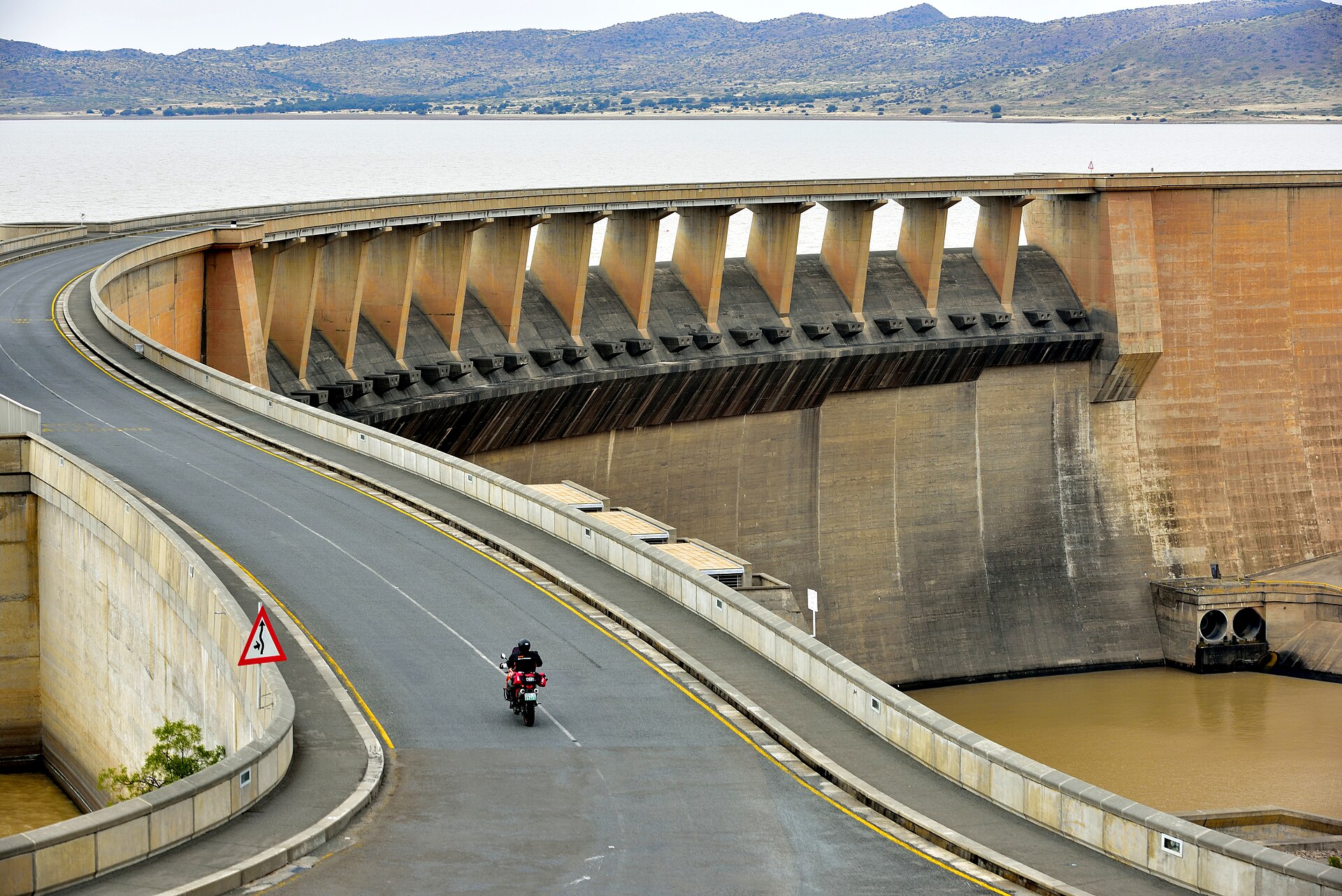
National Dam Safety Overview
46 illegal (ILL status)
56.8% of register
37.8% of register
DSE every 5 years (Reg 11)
DSR Reg 11(1)
+ 80 rated Cond. E
162 / 5,710 dams compliant
For structural compliance, asset monitoring, and lifecycle intelligence.
GEC's in-house tool for candidate engineers working toward ECSA registration.
Explore P2P →Five working platform demos for structural compliance and asset monitoring. Open any tile - each runs entirely in your browser.
Fleet monitoring, digital twins, defect detection, and CR11 / IEC 61400-6 compliance for wind turbine towers.
National dam register, DSE compliance tracking, and hazard classification across all six Water Management Areas.
Interactive tower & foundation twin with a spatial defect register, fatigue modelling, and repair simulation.
Portfolio value, condition, and depreciation analytics over the public national immovable asset register.
Development feasibility and options scoring, built on GEC's construction and refurbishment costing models.
A free guide to the 11 competency outcomes, the Degree of Responsibility scale, and what candidate registration actually involves.
Read the guideStructural compliance, fleet programmes, or a platform walkthrough - start with a message.
Get in touchGlobal Executive Consultants is a South African civil and structural engineering consultancy. Every deliverable carries the stamp of a registered Pr.Eng - and the platforms that monitor the work afterward are built by the same team.
From statutory CR11 structural compliance on wind turbine towers to dam safety intelligence, GEC's work is grounded in real project data, SANS-aligned practice, and ECSA professional accountability.
GEC's own tool for candidate engineers working toward ECSA registration - built in-house, tracked against all 11 competency outcomes, reviewed by GEC's own Pr-registered mentors.
Currently in private beta. Free to start with one category; full access is R49/month, billed annually.
From statutory structural compliance to in-house monitoring platforms - what GEC delivers today.
Analysis and design across concrete, steel, and composite structures - including wind turbine towers and foundations. SANS 10100 & Eurocode 2 compliant.
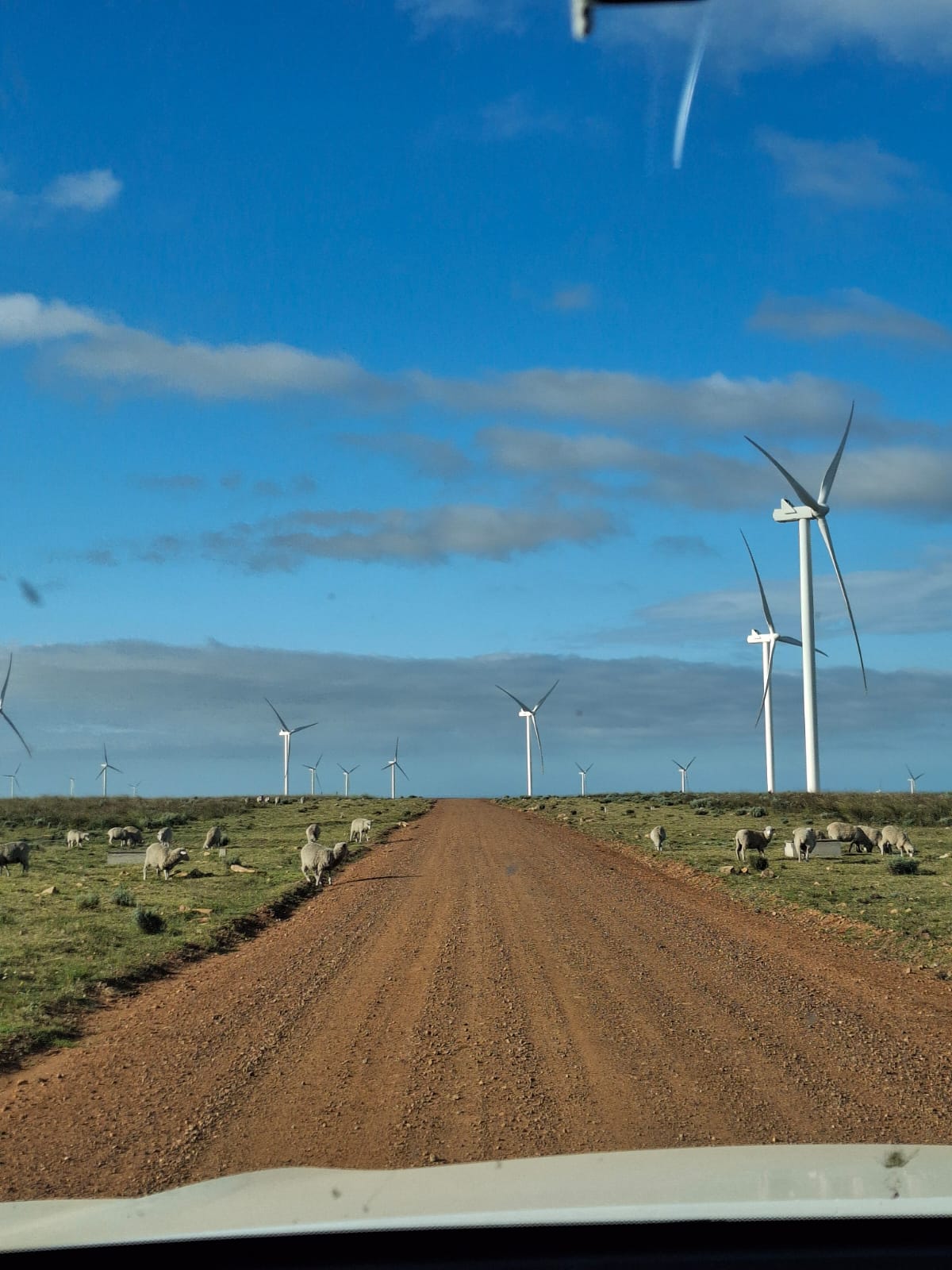
Design · Analysis · Code ComplianceStormwater and sewer reticulation design, quality control plans, and site quality assurance for civil infrastructure and maintenance programmes, including gravel road maintenance for wind IPP sites.
Stormwater · Sewer · QCP · Quality AssuranceCR11 statutory compliance assessment of wind turbine towers - drone survey, structural analysis, and ECSA-signed engineering reports.
CR11 · IEC 61400-6 · ECSA-SignedStructural health monitoring for wind turbine towers - SCADA-ready architecture, digital twin visualisation, and risk classification.
SHM · Digital Twin PlatformSANS 10108-aligned dam safety surveillance and risk assessment dashboards, built in-house for water resource infrastructure owners.
SANS 10108 · PlatformFleet-wide structural compliance programmes for wind IPPs and OEM fleet representatives, structured to protect PPA revenue.
Fleet Programmes · PPA ProtectionReal engagements below, each marked by status: delivered, or still in proposal.
Statutory compliance assessment across WTG 21–24 - methodology review, on-site structural assessment, drone survey, and an ECSA-signed compliance report.
Fleet-wide structural compliance assessment proposed for a 47-turbine wind farm, building on GEC's Garob delivery methodology. Quoted, not yet signed.
An in-house structural health monitoring platform for wind turbine towers - digital twin visualisation and risk classification. A working demo, not yet deployed for a live client fleet.
Structural compliance work extends wind farm operating life under the REIPPP programme; dam safety intelligence protects water security across ~5,710 registered dams. Where remote monitoring replaces site visits, the carbon footprint of infrastructure management falls with it.
Structural engineering, a platform demonstration, or a compliance consultation - tell us what you're working on and we'll respond within one business day.
Send a project brief straight from the form below, or open your own mail app instead - either way, we respond within one business day.
Email us directlyinfo@gec-group.co.za · response within one business day
| Dam Ref. | Dam Name | WMA | Province | Category | Hazard | Condition | Height (m) | Capacity (1000m³) | Owner | Classification Date | DSE Status |
|---|
Apply for dam classification or reclassification. Dams ≥5m height or ≥50 000m³ capacity presenting safety risk must be classified.
DSR Reg 5(1) - 60 daysSubmit a mandatory 5-year DSE for Category II/III dams. Upload reports, FEA outputs and instrumentation data.
DSR Reg 11(1) & 35(2)Report on implementation of remedial works or betterment measures directed under the National Water Act.
DSR Reg 32Register a newly completed dam with the DSO. Submit DW693E form within 120 days of construction completion.
DSR Reg 37 - 120 daysApply for approval as an Approved Professional Person (APP) authorised to conduct dam safety evaluations.
DSR Reg 45 - DW691EReport an emergency condition requiring immediate action. Triggers instant notification to the registered Dam Safety Officer.
NWA §121 - ImmediateDSR Reg 11(1) Every person responsible for a dam with a safety risk shall have a dam safety evaluation conducted by an approved professional person at intervals not exceeding 5 years from the date of classification.
DSR Reg 37 A dam that constitutes a dam safety risk must be registered with the DSO within 120 days of completion of construction or of becoming a dam safety risk.
DSR Reg 5(1) The person responsible shall submit a classification application within 60 days of the dam becoming a safety risk or of being directed to do so by the DWS.
DSR Reg 32 Where remedial works are directed, progress reports must be submitted at intervals specified in the directive. Failure to comply may result in prosecution under NWA §151.
NWA §121 Any person who becomes aware of an emergency condition at a dam must immediately notify the DWS. The responsible person must take all reasonable measures to prevent harm.
| Priority | Dam Ref. | Dam Name | WMA | Category | Classification Date | DSE Due Date | Days Overdue | Condition | Action |
|---|
Last DSE: 12 April 1989. WMA 1 – Limpopo. Category III, High Hazard, 103,000,000 m³ capacity. Immediate directive required under NWA §123(2).
Last DSE: 08 February 2000. WMA 1 – Limpopo. Category III, High Hazard, 203,000,000 m³ capacity. Downstream population at risk. Issue non-compliance notice immediately.
Last classification: 03 January 1989. WMA 1. Category III. 195,000,000 m³. Please submit or coordinate DSE submission. Condition Symbol B.
Bulk notification: 97.2% of registered dams are past their DSE due date. A bulk directive mailout is recommended for all Category III owners. Use "Generate Bulk Directives" to initiate.
New application for APP approval under DSR Reg 45. Qualifications submitted. Awaiting review. DW691E form attached.
DSE report successfully submitted by APP M. Nkosi (APP-0123). Report under review. Condition Symbol pending assessment.
Click any turbine to open its live monitor. Health score blends sensor proximity to thresholds, active defects and alarm load.
Scenario simulation drives a fault into the live stream so you can watch alarms, residuals and recommendations react in real time.
The three assets the model is most concerned about right now.
Live structural sensor channels with thresholds, trends and anomaly flags for the selected turbine.
Green = nominal, amber = warning band, red = alarm band. Updates every second.
Current reading, status and 10-minute rate of change per channel.
| Channel | Reading | Warn / Alarm | Rate (10 min) | Status | Anomaly |
|---|
A geometry-accurate twin of the selected tower and foundation: each defect located in twin coordinates (z / azimuth / ring / face), live sensor fusion, fatigue & remaining-life screen, repair simulation, twin-confidence radar and ISO 17020 evidence gates.
Every defect located in the twin coordinate system. Click a row or a tower hotspot.
| Defect | Coordinates (z / az / ring / face) | Mechanism | Action |
|---|
Click a tower hotspot to jump to its figure; click a photo to enlarge. Synthetic figures - replace with real drone/inspection photos on import.
The twin can only be used for reportable work behind these controls. Click a form to open its template.
| Control | Form | Gate |
|---|
Turbine controller (SCADA) data is fused with the structural sensors so the model separates load-driven response from genuine structural change - far fewer false alarms in high wind, and real faults caught at low load.
A raw vibration alarm during a storm is usually just high load. The fused model compares each reading against what the operating point (wind, rotor speed, power, pitch) predicts. A persistent gap between actual and expected - the residual - is the early signature of stiffness loss, cracking or loosening, independent of weather. The same fusion flags yaw misalignment and drivetrain overheating from the SCADA feed.
Automatic checks that combine structural and SCADA channels per turbine.
| Turbine | Operating state | Vib vs expected | Yaw alignment | Gearbox temp | Capacity factor | Fused verdict |
|---|
We estimate tower/foundation loading and fatigue per wind direction from SCADA (wind speed, direction, turbulence, yaw, thrust) - then target inspection at the worst sectors before installing sensors.
Damage-equivalent loads from SCADA estimate tower fore-aft fatigue to roughly 5–10% - enough to prioritise. Sensors then confirm the flagged sectors. The differentiator is the workflow, not the sensor.
DNV-aligned: four boardroom assurance scores instead of one health number, plus stiffness-degradation tracking and expected-behaviour envelopes. A turbine can be physically fine but evidence-poor - or damaged but well-controlled.
Green = reuse candidate · Amber = conditional · Red = not until closed · Black = immediate make-safe.
| Turbine | Stiffness index | Fatigue | Modal drift | Safety | Gate |
|---|
The engineering "birth certificate" per turbine, the SA Construction Regulations duty-holder trail, certification readiness and data confidence - the regulated-engineering layer global SHM vendors don't localise.
Every defect and repair mapped to the responsible duty holder and the evidence on file.
| Duty holder | Evidence required | Status |
|---|
Bankable evidence packages - a readiness view, without overclaiming certification.
| Package | Evidence required | Status |
|---|
Software-generated assurance intelligence. Formal certification remains the statutory domain of ECSA-registered professionals; this is a readiness view, not a certificate.
A digital inspection-body QMS embedded in the platform: clause-to-evidence map, procedure & form register, inspection-workflow controls, readiness tracker and a working form engine. This supports accreditation evidence - accreditation itself still requires demonstrated operation, internal audit, management review and a SANAS assessment.
| Clause | Title | Status | Evidence forms |
|---|
Status is derived from records actually captured in the tool - not a checklist. As you operate the QMS (equipment, declarations, inspections, audits, reviews) clauses move Gap → Partial → Operating and readiness rises. This is your accreditation evidence trail toward Type A inspection-body (AIA) status.
Z-score > 3σ against each channel's rolling baseline - catches drift the fixed thresholds miss.
Adjust warning/alarm limits live. Changes re-evaluate the whole fleet instantly.
Chronological record of raised, acknowledged and cleared events.
| Time | Turbine | Channel | Severity | Value | Type | State |
|---|
Turn alarms into tracked maintenance actions. Saved in your browser between sessions.
| Turbine | Issue | Priority | Status | Created | Manage |
|---|
Model-based RUL combines design life, age, condition factor and accumulated fatigue. Indicative only - confirm with a Pr Eng residual-life assessment.
| Turbine | Age / design life | Condition factor | Fatigue used | Modal drift | Est. RUL | Recommended action |
|---|
Defect register and synthetic evidence cards linked to the live monitoring picture.
| ID | Type | Location | Priority | Mechanism | Action |
|---|
Converts monitoring evidence into insurance, warranty and budget decision packs.
Book value, replacement cost, repair capex, downtime exposure and revenue-at-risk linked to each defect class and alarm.
Every claim carries source evidence, timestamp, sensor trace, inspector, standard, causation, duty holder and mitigation trail.
Separates design defect, construction defect, maintenance defect, normal wear and force-majeure arguments.
| Turbine | Exposure | Legal evidence | Position |
|---|
Converts monitoring data into a defensible claim position - the commercial edge over raw SHM.
| Turbine | Observed condition | Probable category | Likely mechanism | Exposure |
|---|
How structural condition and monitoring data drive tower/foundation reuse and asset value.
| Turbine | Age / remaining life | Condition factor | Indicative value | Repowering gate | Decision |
|---|
Asset hierarchy and full metadata. Replace demo records with client imports.
| Turbine | Wind farm | OEM / model | Tower type | Foundation | Capacity / age | Health | Defects |
|---|
What it costs to instrument a turbine, what keeps the sensors running, and how the numbers scale to a fleet. Figures are industry-typical ranges in USD - adjust to your quotes and currency.
A full structural-health package. The operational/drivetrain CMS and the SCADA feed are listed separately below.
| Sensor / device | Qty | Unit cost (USD) | Line total | Measures | Calibration | Service life |
|---|
Pick the failure mode you need to monitor - TowerSentry recommends the sensor package, so clients don't waste money instrumenting everything.
SCADA data already streams from the turbine controller. Fusing it costs integration time, not hardware - a protocol bridge (OPC-UA / Modbus / API), no sensors to buy or maintain. It is the cheapest accuracy upgrade available.
Wireless IoT (solar + battery, cellular) cuts install labour and cabling at height dramatically, at the cost of battery service every 3–5 yrs and data-plan OPEX. Wired/vibrating-wire lasts longer and needs less power maintenance but costs more to install.
A single avoided foundation/tower failure or emergency crane mobilisation (≈ $200k–$2m+) pays for fleet-wide monitoring many times over.
Cost basis: basic vibration CMS ≈ $3,000–$8,000/turbine hardware + ≈ $2,000 install + ≈ $750/yr service (NRG Systems / Windpower Monthly); full structural SHM adds tilt, strain, settlement and bolt-load instrumentation (Worldsensing, Canary Systems, Encardio Rite, Resensys, HBK). Ranges are indicative - confirm with vendor quotes.
Generated from synthetic live data ·
Interactive geometry, defects, sensors, fatigue, repair simulation and ISO 17020 evidence controls. GEC structural engineering practice - producing intelligence through engineering & AI.
| Defect | Coordinates | Mechanism | Action | Claim |
|---|
| Option | Capex | Downtime | Risk reduction | Life extension | Claim |
|---|
| Control | Form | Gate |
|---|
Interactive analytics over the national immovable asset register - land parcels and building improvements with a full FY2014–FY2025 financial history: carrying values, depreciation tracking, condition profile and acquisition timeline. GEC structural engineering practice - producing intelligence through engineering & AI.
Structure extent is the gross footprint area of building improvements; land extent is the registered parcel area per the deeds records.
Drill from province to administrative region. All figures respect the global filters above; click a province row to expand its regions, and click a column header to sort. Values in R millions; individual asset records are intentionally not published here.
| Province / Region | Assets | Cost / Value (Rm) | Accum. Depr. (Rm) | Carrying (Rm) | Share % |
|---|
Feasibility studies & options analysis for private development - construction/refurbishment costing, escalation risk, development margin, and a weighted scoring matrix to identify the best option. GEC structural engineering practice - producing intelligence through engineering & AI.
Each row uses GEC's default assumptions for that project type (not your edited overview inputs) with a neutral score of 3/5 on the judgement-based criteria, so the comparison is apples-to-apples. Ranked by overall feasibility score - the highest-ranked option is highlighted.
| Rank | Project Type | Total Investment (Incl. VAT) | Cost / m² | Escalation Risk | Feasibility Score | Verdict |
|---|
Base cost = Extent × Units × Rate.
Pre-tender escalation compounds the base cost monthly over the pre-tender period.
Construction escalation compounds again over the construction period.
Professional fees are applied to the fully-escalated construction cost.
Total investment = escalated cost + fees + land/acquisition, then VAT is added.
Capital Cost Efficiency 20% · Affordability/Development Margin 20% · Programme/Time-to-Market 15% · Cost & Escalation Risk Exposure 15% · Buildability/Delivery Complexity 15% · Sustainability/Market Positioning 15%.
Margin and escalation-risk scores are auto-derived from your inputs; the rest are judgement calls you set on a 1–5 scale.
This calculator is a simplified, web-based companion to GEC's full private-industry Excel Investment Dashboards (formula-driven, zero calculation errors), one per project type:
| Project Type | Workbook |
|---|---|
| Apartment Block | Apartment Block - Private Industry Dashboard.xlsx |
| Residential Development | Residential Development - Private Industry Dashboard.xlsx |
| Residential Houses | Residential Houses - Private Industry Dashboard.xlsx |
| Industrial / Warehouse Facility | Industrial Office - Private Industry Dashboard.xlsx |
| New Office Building | New Office - Private Industry Dashboard.xlsx |
| Office Building Refurbishment | Office Refurbishment - Private Industry Dashboard.xlsx |
| Residential Refurbishment | Residential Refurbishment - Private Industry Dashboard.xlsx |